
The Great Decoupling 2: Changes in Ocean Biochemistry Driven by Strengthening Stratification
As the ocean carbon sink flattens, new research reveals how the biochemical impacts of warming and stratification are fundamentally compromising the sea’s ability to sustain life and regulate climate.


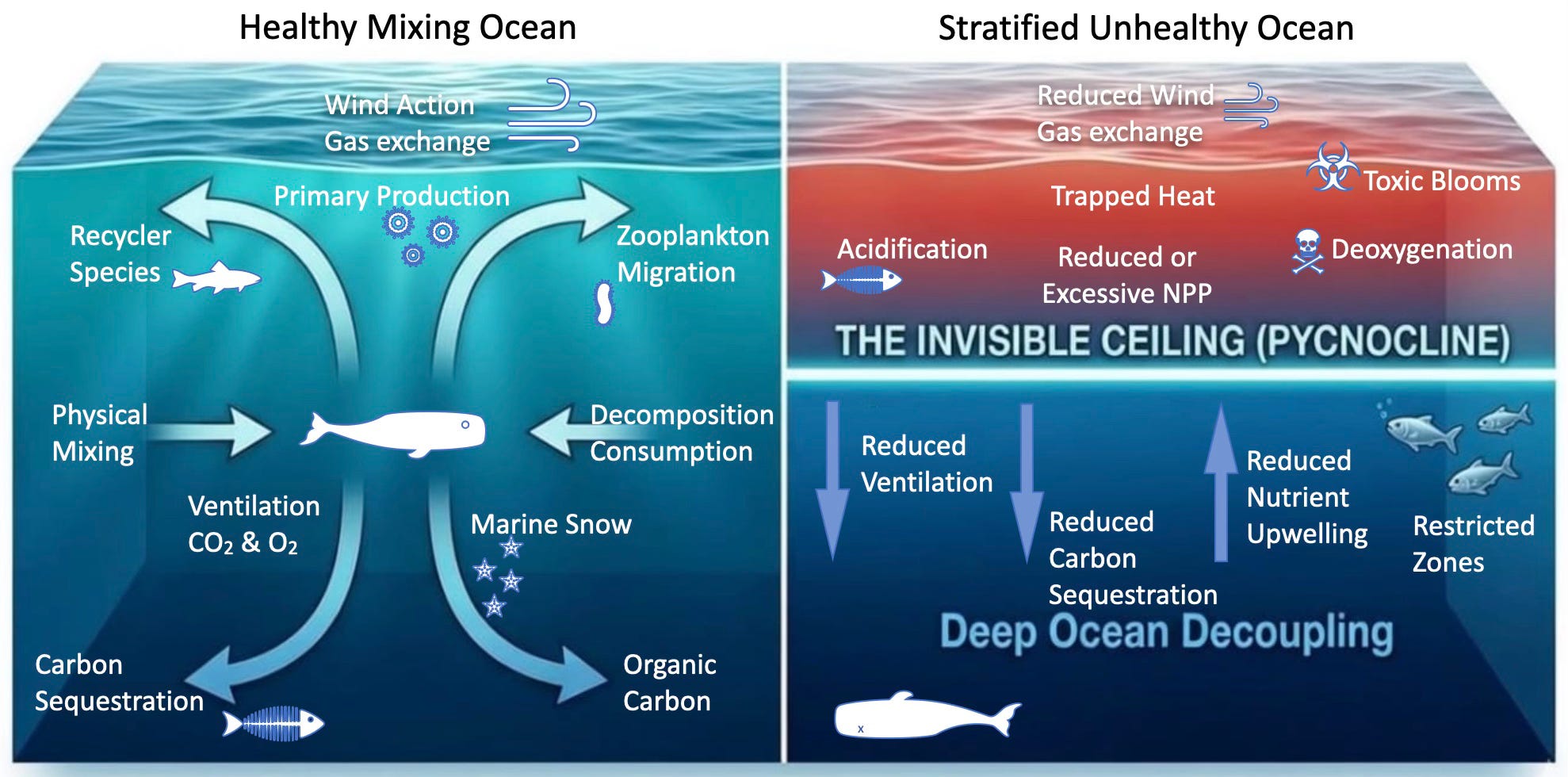
Ocean stratification and marine heat waves
In a previous article, we outlined the changes underway in the World’s oceans due to increased Ocean Stratification.1 The process by which mixing between water bodies at different depths and with different densities is reducing, locking warmer waters in the surface layers. Since the oceans are absorbing about 90% of the energy from global warming, huge amounts of heat content is accumulating and being trapped in the upper layers of the ocean. This is leading to marine heat waves, changes in weather patterns, supercharging storm strength and rainfall and powering El Niño assisted jumps in global temperature.
That article covered the physical processes and implications, but the ramifications go much deeper. The very chemistry of the oceans is changing and with it the biology, affecting not only ocean life, but carbon storage, a critical sink for our continued emissions.
Ocean Deoxygenation
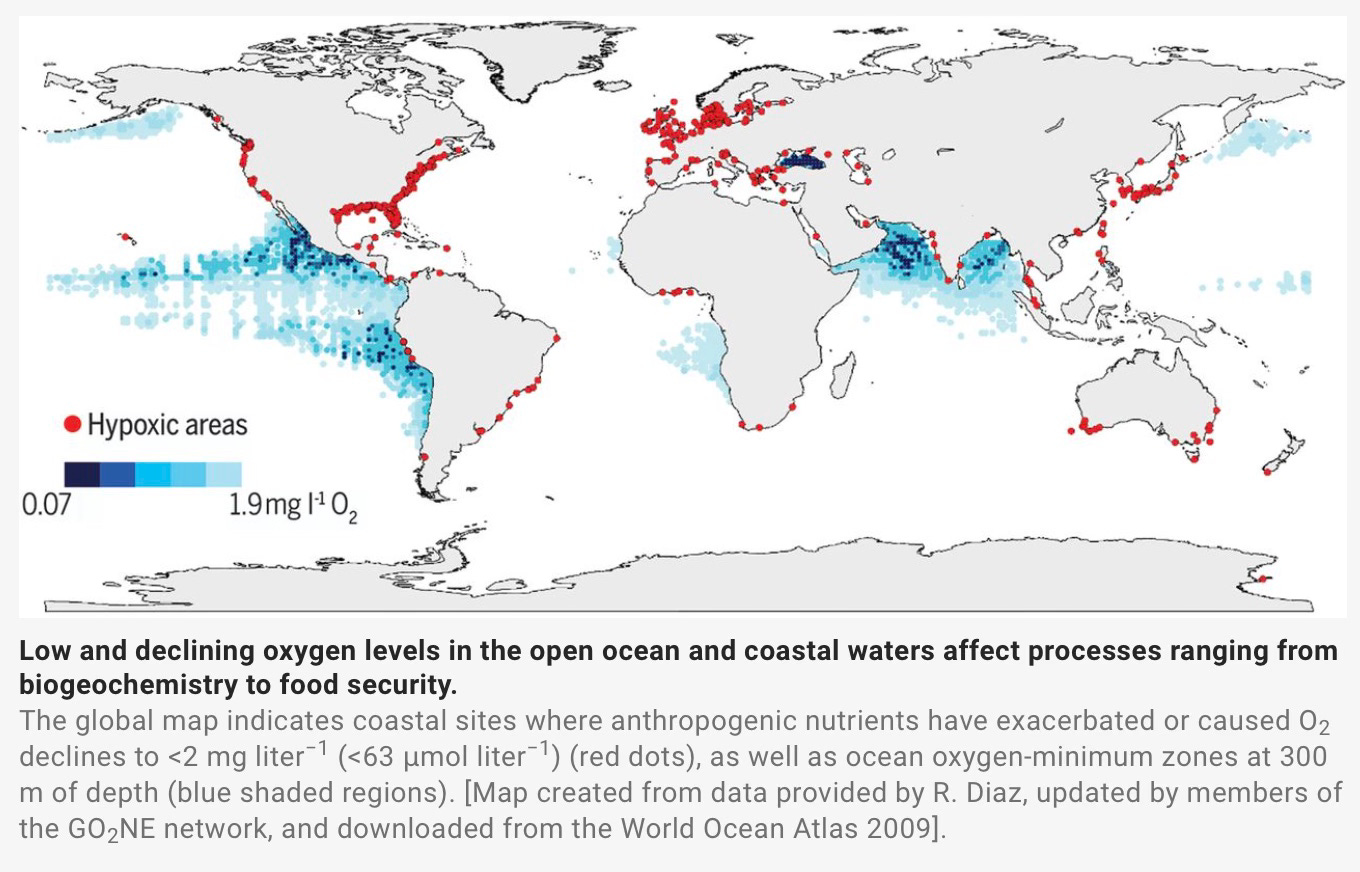
Earth’s oceans are losing oxygen; since the mid-20th century, 1%–2% of the global ocean oxygen inventory has been lost. Over 700 coastal sites have reported new or worsening low-oxygen conditions. Seasonal oxygen minimum zones are spreading. In recent decades observations show a new trend in that coastal low oxygen (hypoxic) or free of oxygen (anoxic) water masses are becoming permanent. Deoxygenation of coastal systems is as much a driver as it is an outcome of harmful algae blooms that expand and intensify, now affecting all the coasts of the planet. The decomposition of the organic matter of these blooms deprives the water of oxygen. Marine heatwaves that are now spreading and intensifying are now frequently observed to accelerate both trends.
Other contributing factors can be the collapse of food webs (e.g. grazing zooplankton); reduced oxygen inputs from rivers; upwelling of low oxygen water. In addition large scale floods flush nutrients into coastal systems creating a highly stratified brackish surface layer at the top. This thin layer can heat up fast to extreme marine heatwave levels, driving further oxygen loss, also below it. Further, oxygen minimum zones (hypoxic and anoxic) cause nutrient to leach from the sediments (Fe and P) which feeds back on bloom production. It’s a striking example of a vicious circle that is now gaining such a magnitude that a warning has been issued that its impacts could reach Earth system levels.2
In the open ocean, oxygen-minimum zones (OMZs) have expanded by 4.5 million km2. The volume of anoxic water has increased more than 4 fold3 One reason for this is warmer water reduces the solubility of oxygen. In the upper 1,000m of the oceans, warming is responsible for 50% of the oxygen loss. Closer to the surface deoxygenation often happens faster (e.g. shallow shelf regions). In regional hot spots of the upper oceans and within ocean currents, deoxygenation can reach double digits. Of the total, 15% of the oxygen loss is due to warming
Warming also increases the metabolic rate of aerobic microbes and zooplankton which increases their oxygen demand. This is particularly important for the decomposition and consumption of sinking particles of organic matter such as dead algae and faecal pellets (marine snow). Decomposition of organic matter occurs faster under warmer temperatures. Reduced sinking rates of particular organic matter worsens the problem. This can be caused by warming (e.g. MHWs) which induce a shift to smaller algae and zooplankton species. This in turn, reduces the size of the sinking particles of organic matter, making them sink slower and be more easily trapped in stratified layers while metabolic rates increase. These changes shift oxygen consumption towards shallower depths, leading to changes in oxygen distribution within the water column.
After temperature solubility effects, increasing ocean stratification accounts for the remaining 85% of the oxygen loss. It reduces the ventilation effect of water mass mixing and transport to the depths. Further, stratification reduces the supply of nutrients into the upper ocean which reduces the production of organic matter and its subsequent sinking down from the surface.
The map below shows the extent of low and declining oxygenation. The red dots are areas of hypoxia.4 These are regions where oxygen levels are so low that physiological and ecological processes are impaired. Oxygen requirements vary between species, with some adapted for low oxygen conditions, but the majority of species including important fishery species, cannot tolerate it without showing negative effects including weight loss and stunted growth as is now widely evident in the Baltic Sea.56 In the global oceans, warming and deoxygenation are now starting to have large effects on global marine species.7 The physiological effect is similar to that suffered by high mountain climbers when they enter the “dead zone” of severely reduced oxygen availability.
Hiding within the 1-2% overall decrease however, are the much more damaging compound extremes that are occurring during marine heatwaves with significant impacts on ocean health.8 Marine heatwaves (MHW) are becoming more common, more intense, and longer lasting with global warming and increased stratification. In addition, circulation changes are another driver increasing stratification, which also increase during MHWs.
Evidence shows that these events are matched by local deoxygenation events exacerbated by the high temperatures. Hotspots identified in a paper by Li et al. indicate that this intensification is more pronounced in high-biomass regions than in those with relatively low biomass, presumably due to increased metabolic rates and biomass speeding up oxygen usage. The oceans are literally losing their breath under the influence of increasing heatwaves, stratification and warming.
Ocean Acidification
Like oxygen, carbon dioxide is also soluble in water - that’s how fizzy drinks work. As the concentration of CO2 in the atmosphere increases from our emissions, more is absorbed by the oceans. In doing so it forms carbonic acid, which breaks apart and releases hydrogen ions. These hydrogen ions bind with carbonate, making less of it available, lowering the aragonite saturation state. Aragonite is the more corrosive form of calcium carbonate that upper ocean marine organisms – like corals and shellfish – use to build their shells and skeletons.
Last year it was confirmed that Ocean Acidification, one of the nine Planetary Boundaries had been breached, bringing the total to seven.910 Ocean Acidification is now approaching critical values. The numbers are impressive.
From 1959 to 2022 the oceans absorbed approximately ~125 billion tons of carbon.11 That’s a lot even for oceans. All the carbon entered from the top. pH levels dropped by -0.017 units per decade from 1985 to 2025.12 This “tiny” decrease increased the corrosiveness of seawater by 30% since pH is logarithmic. Of the global surface oceans 40% reached critical acidity values, of the subsurface down to 200m it’s a staggering 60%. Yet again, marine heatwaves makes matters worse. Besides low oxygen extremes, marine heatwaves are also observed to co-occur with acidification extremes.
The chart below shows the ocean acidification as indicated by aragonite saturation state for 2015-24 against the pre-industrial state. Note how the extent is greatest at the poles, especially in the Arctic. This is due to the water being cooler and able to dissolve more CO2 than the warmer waters at lower latitudes. Acidification of the Arctic Ocean is a major concern.
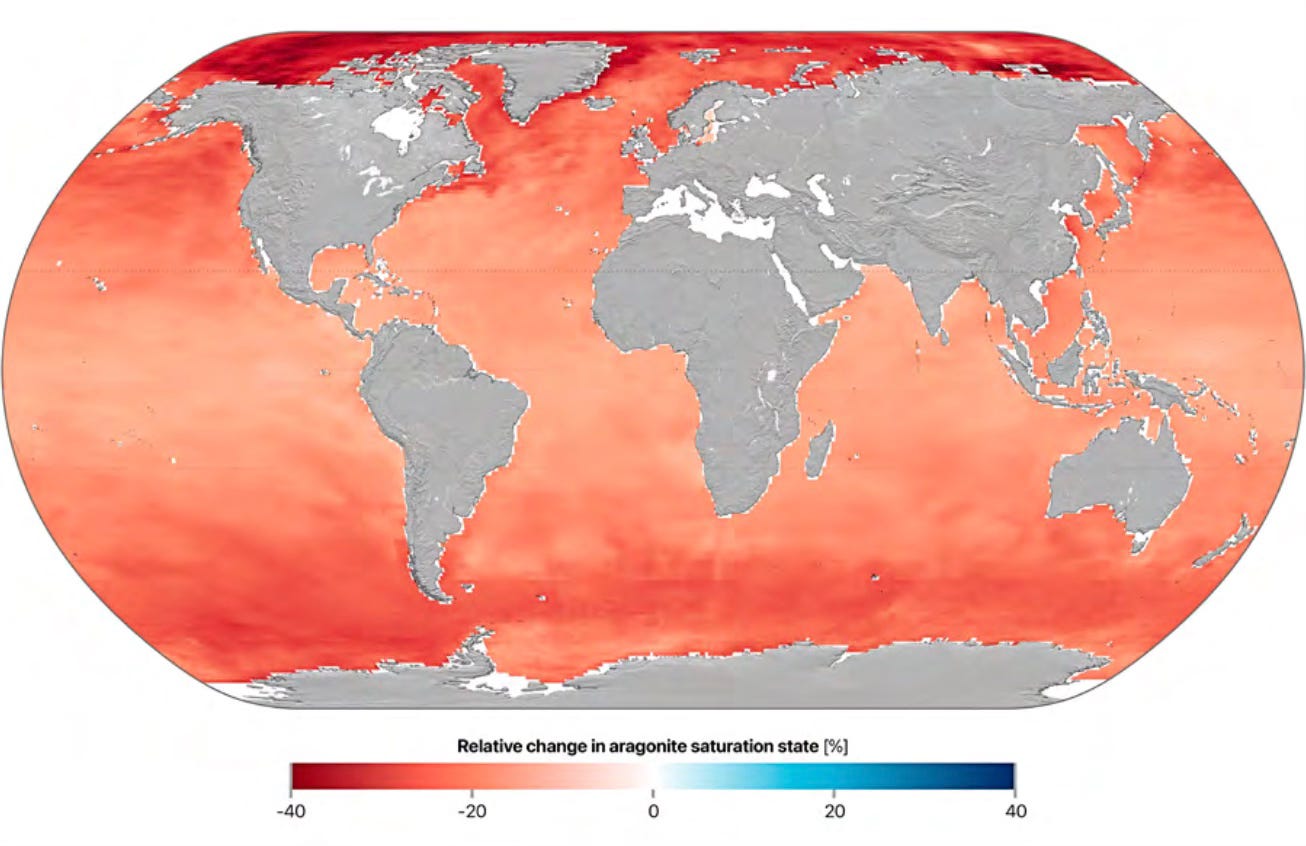
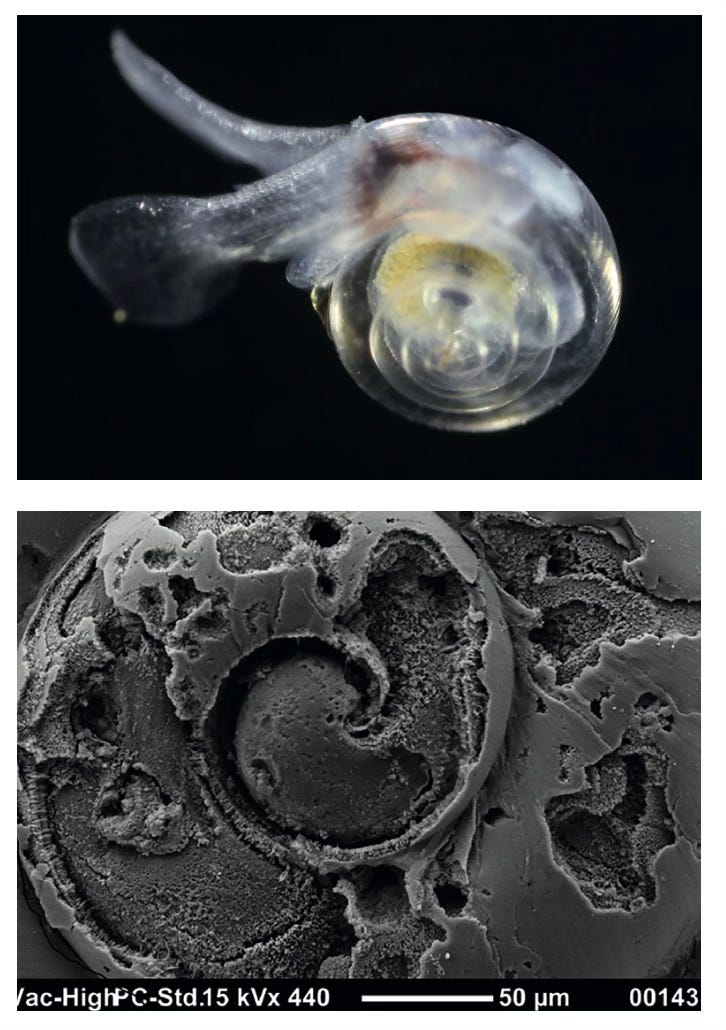
These changes result in significant declines in suitable habitats for important calcifying species, including a 43% reduction in habitat for tropical and subtropical coral reefs, up to 61% for polar pteropods, and 13% for coastal bivalves. Acidification is essentially permanent, with full recovery taking 50,000-70,000 years. The images below from the 2024 State of the Cryosphere Report shows the damage from acidification already being observed in the Arctic.13
In addition to the harm caused to marine life, acidification also reduces the amount of CO2 the water can absorb from the atmosphere. This effect is linked to acidification driven reduction of carbonate ion availability in seawater. This can lead to a decline in total alkalinity. Since these ions are crucial to the ocean’s buffering capacity – the system that helps neutralize acidity – their decline weakens this natural buffer. As a consequence the efficiency by which CO2 reacts with sea water to form bicarbonates for example declines.14
Under normal circumstances new carbonate ions are mixed into the surface layer. Stratification suppresses this process which could lead to a weakening ocean carbon sink. Such a development is projected to impair the ocean carbon sink in the centuries to come.15 In the light of recent sudden increases in upper ocean stratification one may wonder if this is not already having an effect on carbon uptake rates.
Food web impacts
At the very top of the food web, tiny photosynthesising algae and single celled phytoplankton create what is know as Net Primary Productivity (NPP). Here the sun’s energy is converted to organic matter, using CO2 and releasing oxygen. These tiny creatures are then food for zooplankton, then small fish and crustaceans like krill, larger fish all the way up to whales (and humans). A healthy ocean with high NPP supports a vibrant food web, low NPP starves the whole system, while extreme NPP values can cause whole systems to flip.
NPP is affected by stratification and marine heatwaves in complex ways. Photosynthesis does not only rely on CO2 availability. Just like plants on land, marine primary producers rely on other nutrients including nitrogen, phosphates, iron and other micro-nutrients. Iron in particular is delivered via dust storms from the air, making natural variation very complex. This is further exacerbated by air pollution which can change the acidity of the air affecting iron mobilisation from the dust particles. Nitrogen and phosphate runoff from rivers is increasing as humanity uses more and more on land based crops. This is being added to by thousands of synthetic chemicals which are now detectable even in assumed pristine environments, including pesticides, micro plastics and pharmaceuticals, which are having a growing impact on the system.16
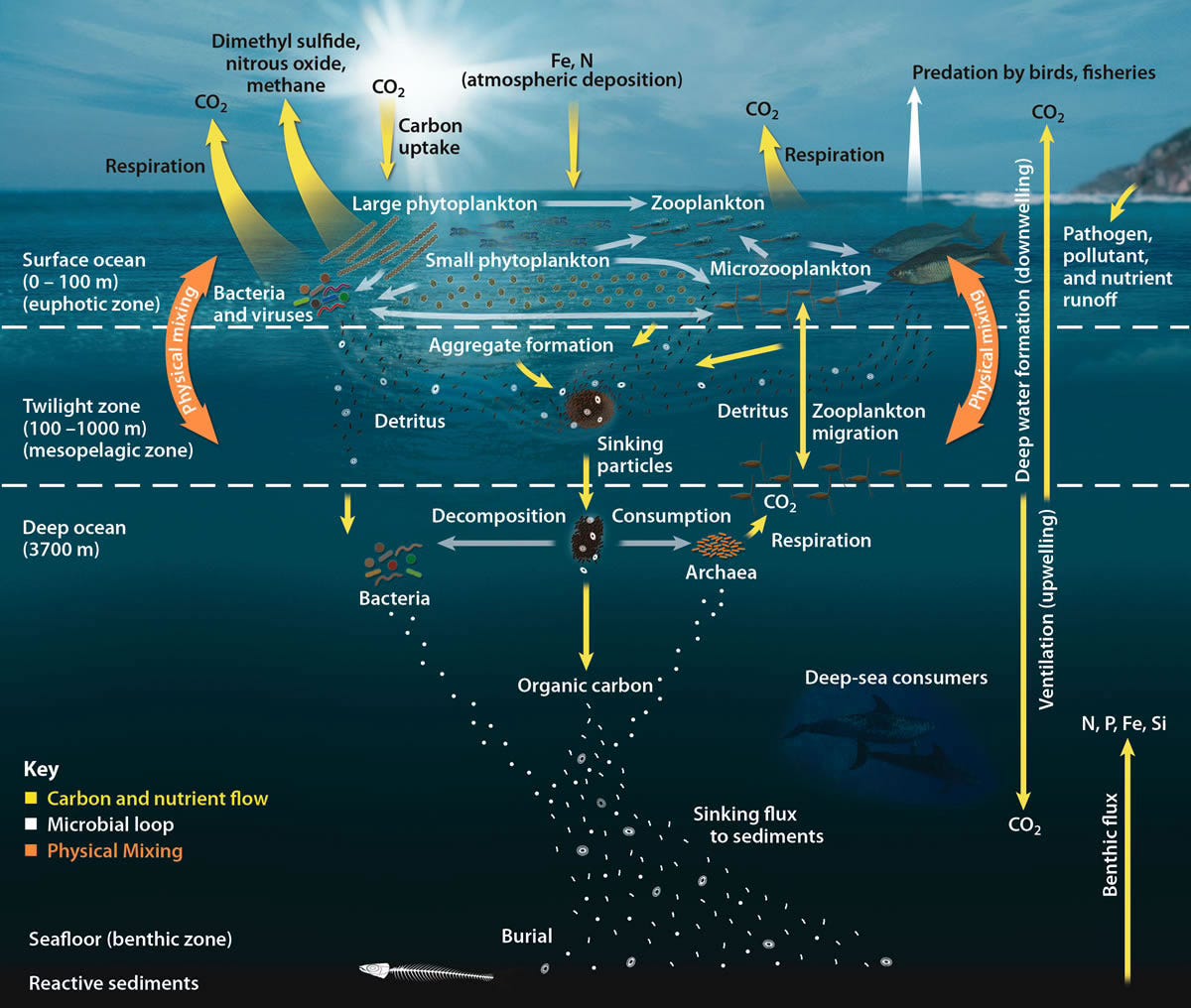
When it comes to marine heatwaves, if they occur in areas of poor nutrient content, they further reduce NPP, but when they develop in high nutrient areas, NPP increases. There is also a latitude component. Lower latitudes surface NPP decreases with higher Sea Surface Temperatures, while at higher latitudes surface NPP tends to increase. Near the continents exceptional blooms are on the rise. One of the largest, a neurotoxic one, stretched along the North American west coast in 2015.17 The Arctic Ocean is emerging as a hot spot of exceptional blooms driven by nutrient inputs of a melting, thawing, and burning Arctic and warmer water temperatures.18
In the oceans subsurface chlorophyll maximums (SCM) often form near stratified layers. NPP values in these subsurface layers can be even higher than in the upper water column. Recent observations indicate that marine heatwaves strengthen biomass production in subsurface layers. Part of this process is due to the MHWs, linked to stratification increases, create more stable conditions conducive to microbial activity in subsurface layers due to lower turbulence. Further, MHW–driven stratification increases the residence time of phytoplankton in the euphotic layer, allowing a greater exposure of primary producers to light.
Fernández-Barba et al. recognised two clear peaks in NPP in the Southern Ocean in 2004/05 and 2011/12, especially in the Atlantic sector, that coinciding with strong MHWs during these El Niño and La Niña years, respectively.19
In shallower coastal and continental plane regions, MHWs cause warming on the seabed with what is now understood to have devastating effects. In a study analysing over 700,000 estimates of biomass change across more than 33,000 fish populations in the northern hemisphere between 1993 and 2021, it was found there is a 7.2% decline in fish biomass (the total weight of living fish in a given area), for every 0.1°C of seabed warming per decade. In the worst cases, long-term warming was associated with annual biomass declines of up to 19.8%! 20
Productivity by phytoplankton at the ocean surface also produces complex aerosol particles which act as cloud condensation nuclei, important for the formation of clouds and downwind rainfall. Disruption, either positive or negative, to NPP has knock-on effects that change the weather hundreds of miles away. While in the Northern Hemisphere aerosols were decreasing, in the Southern Hemisphere they have increased in the last decade. One possible reason is that biogenic aerosols (e.g. dimethyl sulphide) are being formed from higher NPP levels in the Southern Ocean.2122 Ali Bin Shahid’s Regenesis Substack has a lot of great content on this aspect.23
Surface Darkening of the oceans
About half of Earth’s net primary production of 50 Gt C is done by phytoplankton in the photic zone of the oceans, on average the top 150 - 200m, where sufficient light penetrates to enable photo-biological processes and NPP to occur. It’s now evident that this layer is shrinking as waters become greener and darker. This was first noticed in coastal regions but recent work by Davies and Smyth show that huge areas of open ocean are also affected.24
The darkening is caused by attenuation of natural light by elevating concentrations of plankton, suspended particulate matter, coloured dissolved organic matter and other optically active constituents in the seawater. The map below shows the changes observed over 20 years, the red areas indicate darkening.
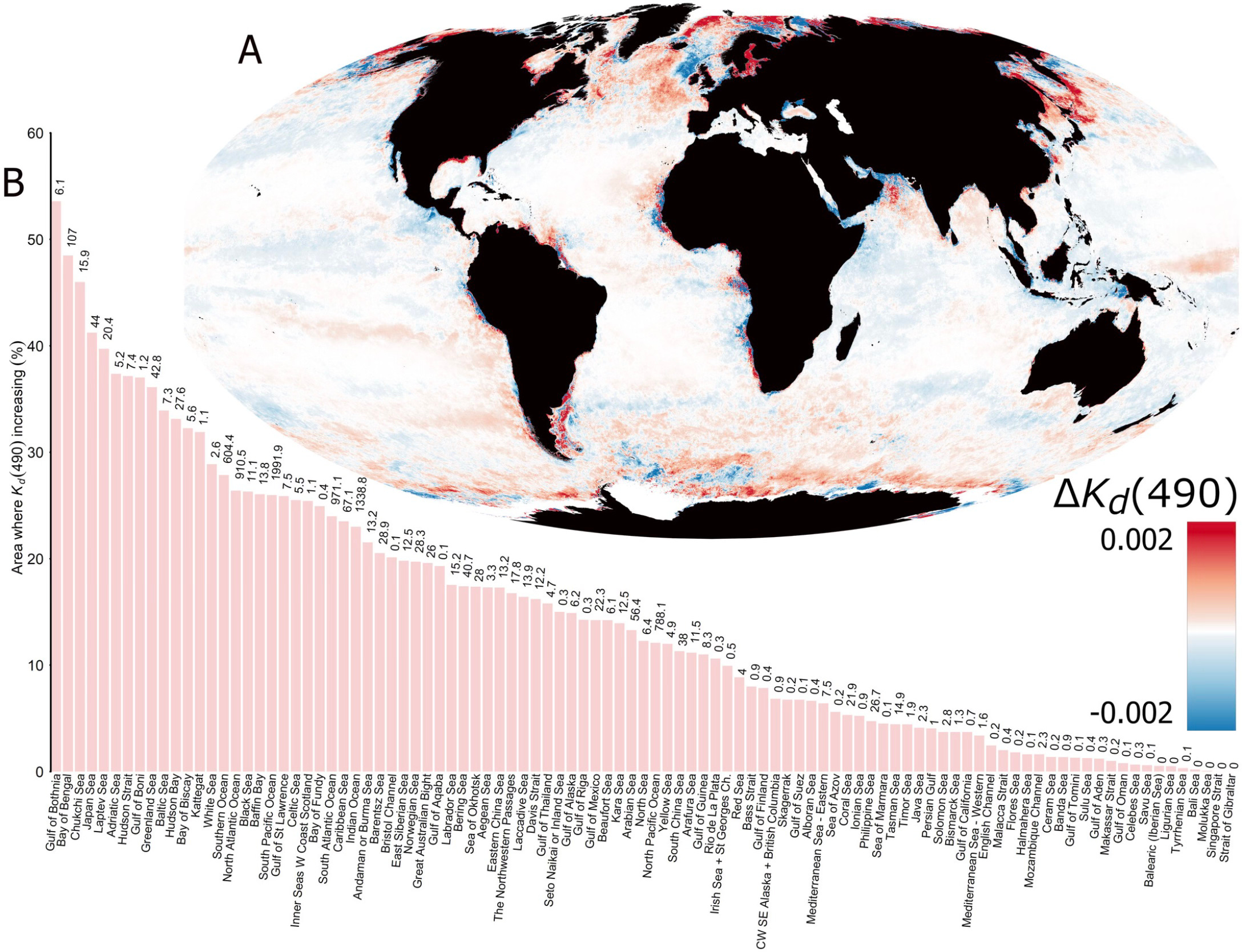
These changes have profound effects on marine creatures, especially the daily migration of zooplankton between deeper dark water during the day and moonlit surface waters during the night. This daily migration is the largest on the planet in terms of biomass, and is likely to be disrupted or at best restricted to shallow waters. This affects the nutrient mixing further, locking carbon in the upper layers.
The fact that open ocean regions are darkening suggests that light attenuation across the oceans is not driven exclusively by localised nutrient loading, run-off and upwelling in coastal regions. While these factors will clearly influence light attenuation in coastal waters, darkening in the open oceans may be driven by surface warming in colder, nutrient rich regions where warming and MHWs increases biomass production, stratification, and detritus accumulation, as well as circulation changes (e.g. intensifying eddy fields, winter storms).
Without sufficient light with which to grow, move, hunt, communicate, reproduce and photosynthesise, marine organisms will be forced to migrate vertically into an increasingly smaller belt of sufficiently lit surface waters, exposing them to higher levels of competition for resources and elevated risk of predation. The implications for marine food webs, global fisheries, carbon and nutrient budgets could be severe.
Darkening of the oceans has a feedback effect on heat uptake. The warming effect of coloured dissolved materials in the surface layer can be significant. One study showed that their presence leads to an increase in the amplitude of the seasonal sea surface temperature cycle over coastal and northern sub-polar regions, which may exceed 2°C during a single bloom event.25 The size and sign of the change are controlled by the interplay between enhanced shortwave heating of the surface, shading and cooling of the subsurface, and the extent to which these are connected by vertical mixing (the stratification strength).
It is very concerning that a darker uppermost water column is accumulating more of the suns radiation driving further stratification trends. Over the higher latitudes of the Southern Hemisphere oceans this could trigger a vicious cycle in the coming decades.
Oceanic Carbon Pump changes
Stratification and MHWs have been linked to reductions in carbon sequestration to the deep ocean floor and its long term storage. Particulate Organic Carbon (POC) is being confined to shallower depths. In a study using ARGO floats (autonomous robots that dive to 2,000m or deeper, taking measurements before returning and transmitting their data via satellite), water-column plankton community profiles revealed the impacts of MHWs on POC production, transformation, and transport in the northeastern subarctic Pacific Ocean.26 POC concentrations were exceptionally high during the 2015 and 2019 MHWs, linked to detritus enrichment and shifts in plankton community structure. Instead of being rapidly exported to depth, particles <100 μm accumulated in mesopelagic waters, which reduced the particle flux to greater depths and thereby carbon sequestration potential during the events.
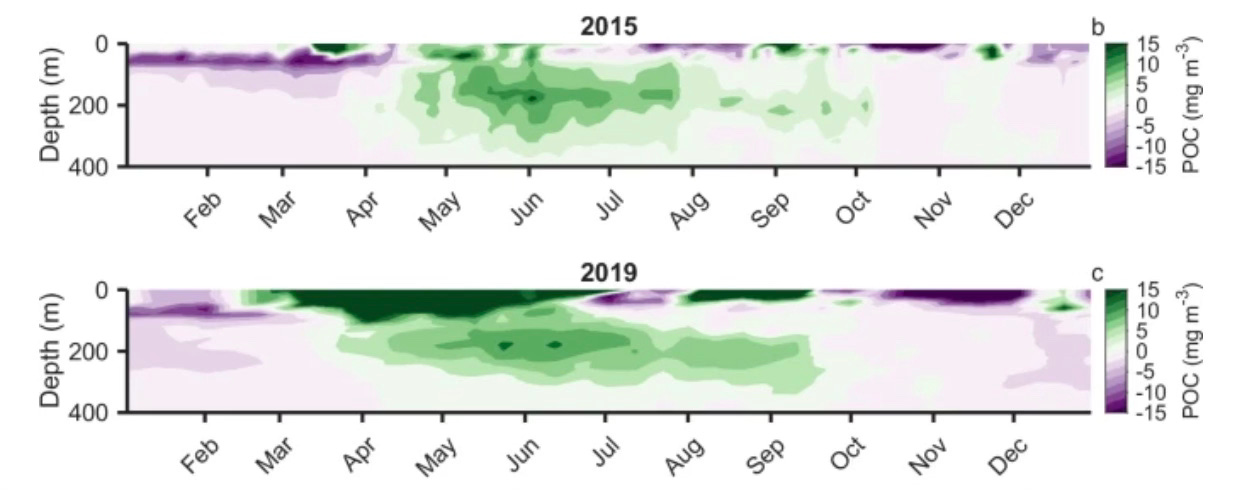
In this way the stratification creates a physical barrier (e.g. the pycnocline) that nutrients and prey items cannot cross. Mesopelagic species (200-1,000m) like Lanternfish or Bristlemouths operate as another key part of the ocean’s “conveyor belt,” connect food webs from phytoplankton to predators that recycle nutrients and export carbon to the abyss. However, as the surface layer becomes a hot zone, these species face a metabolic “thermal wall.” If the water is too hot, these recyclers may stop migrating to the surface while upward moving deoxygenation in the subsurface reduces their habitat at depth in distinct regions. This can break the biological pump in a region, or during a warming event. Without these species “stirring” the nutrients, phytoplankton can die off, the ocean absorbs less CO2, and global warming accelerates.
Nutrient availability is highly important to productivity, especially nitrate and phosphate. Using nearly a century of global ocean data, a new study27 showed that nutrients are changing in different and substantial ways depending on location. In coastal areas near humans, nutrient levels are rising, likely due to pollution and runoff. But far from shore, nutrients near the surface are decreasing - especially phosphate - which could reduce marine productivity. Meanwhile, deeper in the ocean, nitrate levels are increasing, possibly due to increases in nitrogen fixation by microorganisms that convert nitrogen to ammonium and ammonia.
Their findings show that ocean models do not yet fully capture these changes, especially the speed at which they’re happening. If current trends continue, future oceans may face widespread nutrient shortages at the surface over large ocean areas, while at deeper layers biological production could increase. All of which could disrupt marine ecosystems and the global carbon cycle further.
Another aspect of marine heatwaves and related compound events of ocean acidification and oxygen minimum zones are the spread of toxic algae blooms. There are now over 150 toxic species that spread in the global oceans, producing some of the most potent neurotoxins known. Over recent decades, observations show how they are spreading along all coastlines of the planet. Further, they are also spreading in the open oceans from pole to pole. These toxins not only affect species from the bottom to the top of the food chains, but also are toxic to humans.
These toxins can accumulate in the water column and sediments and can be aerosolised by strong winds and breaking waves (white caps), affecting coastal communities causing health issues such as respiratory problems. If marine heatwaves coincide with high nutrient levels they can cause exceptional toxic blooms with astonishing biomass levels that can spread over thousands of kilometres of coastlines affecting all of the food webs, the carbon cycle or coastal residents who could suffer health issues since these toxins do not just smell, they can go into the air and if eaten, can be fatal.28
Carbon uptake
The oceans have absorbed 25% of our CO2 emissions. The rate of uptake has followed the rise in atmospheric concentration, so has tripled since the early 1960’s as our emissions rate climbed. It was once thought this would be a stable relationship, but variability is now evident. The sink stagnated during the 1990s with rates hovering around 2 Pg C per year, but strengthened again after approximately 2000, taking up around 3 Pg C per year for 2010–2019. The most conspicuous changes in uptake occurred in the high latitudes, especially the Southern Ocean. These variations are caused by changes in weather and climate, but a volcanic eruption-induced reduction in the atmospheric CO2 growth rate and the associated global cooling contributed as well.29
Data from the Carbon Budget30 shows little growth in the ocean carbon sink since 2019 and the trend from 2013-2023 is essentially flat. Importantly, 2024 has seen a rise in ocean carbon uptake. If we look at the large CO2 peak in the atmosphere in 2024 nothing less should be expected.31 Hence, this signal may not indicate a trend shift. The graph below from the 2025 report shows the emissions and the sinks over time. Note how the ocean and land sinks have flattened over the last 5 years, leaving the atmosphere with a growing share. Hence, the most recent years indicate that both carbon sinks could plateau or even start to weaken, accelerating accumulation in the atmosphere, driving further warming.
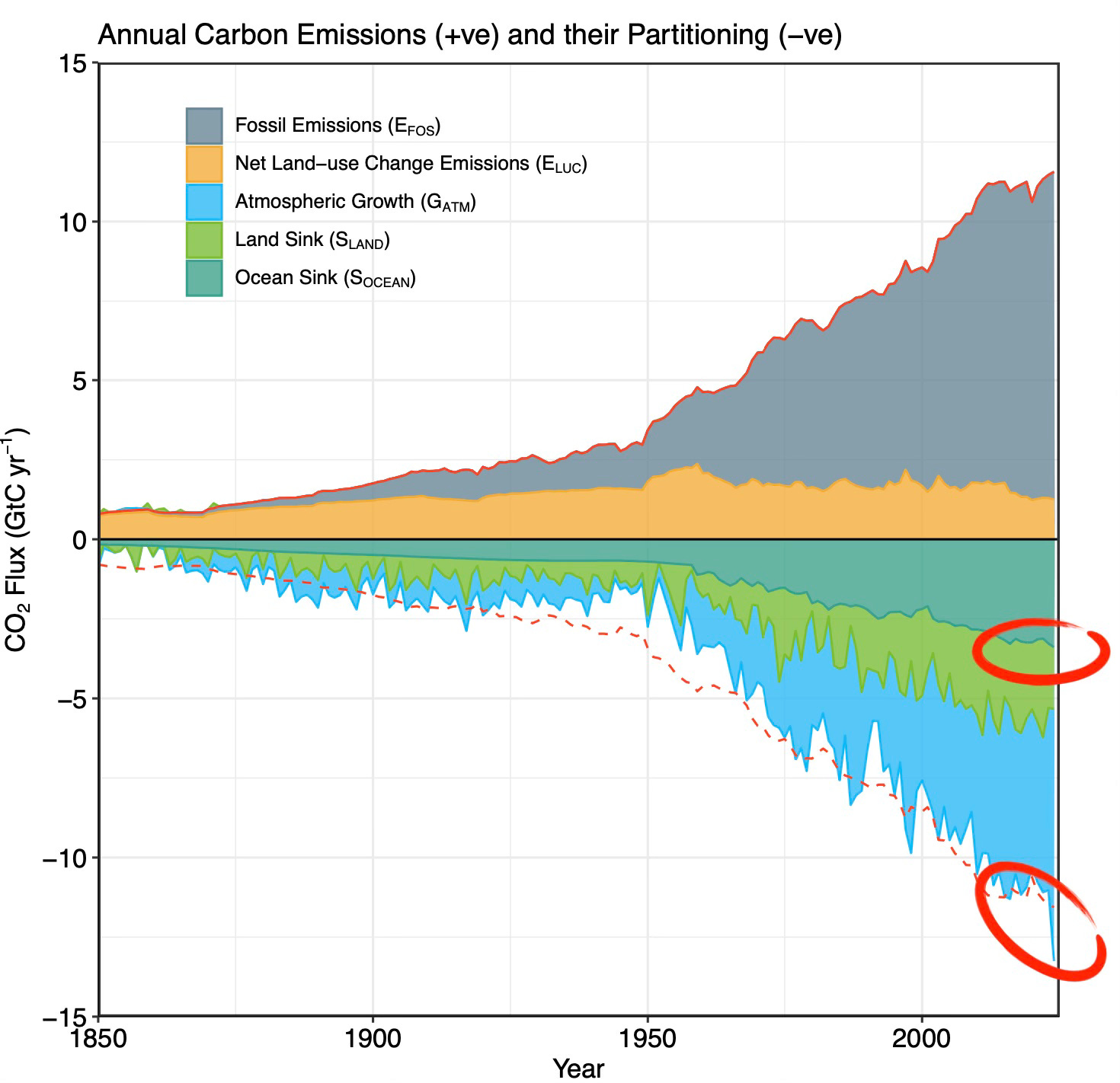
A study by Bunsen et al.32 looked at the climate change effects on ocean uptake besides the atmospheric concentration of CO2. They examined the effect of wind pattern changes, surface water temperatures and stratification, finding that the oceans would have absorbed 13% more CO2 without those climate change effects over the last two decades. As these changes; temperature, wind reductions and stratification continue to increase as warming develops, the efficiency of the oceans in absorbing carbon is therefore likely to diminish.
The slowing down of the biological carbon pump through hypoxia, acidification and pollution is also likely to slow this part of the process, in addition to the food web impacts. One study into the 2023 MHWs calculated that due to the higher temperatures, there would have been a net outgassing of CO2 derived from biological POC production, sufficient to largely eliminating the mean sea-air CO2 gradient over the non-polar global ocean and ceasing the uptake of CO2 from the atmosphere in those areas.33
Implications for the future
The ocean is warming, stratifying, losing oxygen and being acidified, primarily as a result of anthropogenic carbon emissions. With all of these drivers projected to increase for decades, extreme events, such as marine heatwaves, will intensify, occur more often, persist for longer periods of time and extend over larger regions. All the physical, chemical and biological changes covered above are therefore set to increase in severity over the coming years and decades. These impacts act as feedback loops reducing the oceans’ carbon sink capacity, leaving more carbon in the atmosphere, which drives increasing warming and worsening ocean impacts.
Compound events, multiple extreme events that occur simultaneously or in close sequence, are of particular concern, as their individual effects interact synergistically.34 No wonder they are called the “deadly three.”
Another potential feedback linked to both warming and stratification is that of AMOC weakening. Meltwater from Greenland and increased freshwater flow from Arctic rivers is freshening the surface layers of the North Atlantic where the overturning current drops to the abyss. This freshwater strengthened stratification reduces the AMOC strength. This reduces the transport of CO2 laden waters from the surface to the deep, reducing the carbon sink further. Modelling studies suggest losses in carbon sink of between 55 and 110 Gt of carbon dioxide by the end of the century from AMOC weakening alone.35
Conclusions
It is no longer enough to view the ocean as a passive, buffering giant; it is now a system where physical stratification is triggering a cascade of chemical and biological failures.
The evidence converges on a singular, sobering reality: the ocean’s ability to sustain life and regulate the global climate is being structurally compromised. The “triple whammy” of deoxygenation, acidification, and intensifying heatwaves does not just accumulate - it multiplies. As stratification traps heat and CO2 at the surface, it creates a “thermal wall” that suffocates marine life, starves the deep ocean of carbon, and darkens the photic zone in the higher latitudes where primary production concentrates.
Key Takeaways:
The Breathless Ocean: Warming doesn’t just lower oxygen solubility; it accelerates the metabolism of microbes, creating a “metabolic squeeze” where species require more oxygen to survive, just as less is available.
The Acidifying Barrier: The breach of the planetary boundary for Ocean Acidification marks a near-permanent shift in ocean chemistry, threatening the foundational calcifiers of the marine food web, while furthering the spread of toxic species.
The Stalling Pump: The biological carbon pump - the mechanism that moves carbon from the atmosphere to the deep sea - is slowing. This is driven by everything from the loss of vertical migrators (the “recyclers”) to the physical barrier of the pycnocline.
Feedback Loops: We are witnessing the emergence of dangerous feedbacks. A weakening AMOC and reduced CO2 solubility mean that the more the planet warms, the less the ocean can help us, leaving more emissions in the atmosphere to accelerate the cycle.
The transition of the World’s oceans from a stable sink to a volatile source of climate risk is perhaps the most significant challenge of the 21st century. As compound events become the “new normal,” the resilience of global fisheries and the stability of the global carbon budget hang in the balance. The message from the current data, including the flattening of the ocean carbon sink, is clear: the ocean’s capacity to buffer our emissions is reaching a limit, and the biological consequences are already being felt from the Arctic to the Southern Ocean.
If you found this article interesting and useful, please tick the ❤️ button as it helps the algorithm point more people in this direction and gives us feedback on what subjects are most useful. Thank you!
Ma, J., Yang, G., Zhao, X. et al. Mutual feedback between algal blooming and global warming. J. Ocean. Limnol. 42, 787–801 (2024). https://doi.org/10.1007/s00343-023-3093-6
Karin E. Limburg, Denise Breitburg, Dennis P. Swaney, Gil Jacinto, Ocean Deoxygenation: A Primer, One Earth, Volume 2, Issue 1, 2020, Pages 24-29, ISSN 2590-3322, https://doi.org/10.1016/j.oneear.2020.01.001. (https://www.sciencedirect.com/science/article/pii/S2590332220300014)
Denise Breitburg et al. ,Declining oxygen in the global ocean and coastal waters. Science 359,eaam7240 (2018).DOI:10.1126/science.aam7240 https://www.science.org/doi/10.1126/science.aam7240
Husen, M. H., Andersen, N. G., Birnie-Gauvin, K., Sørensen, S. R., van Deurs, M., & Behrens, J. W. (2026). Baltic Cod reshaped by mild hypoxia – subtle oxygen decline triggers profound physiological changes. In Havforskermøde 2026: Abstractbog (pp. 31-31). Aarhus Universitet.
Orio A, Heimbrand Y, Limburg K. Deoxygenation impacts on Baltic Sea cod: Dramatic declines in ecosystem services of an iconic keystone predator. Ambio. 2022 Mar;51(3):626-637. doi: 10.1007/s13280-021-01572-4. Epub 2021 Jun 1. PMID: 34075555; PMCID: PMC8800964.
Morée, A. L., Clarke, T. M., Cheung, W. W. L., and Frölicher, T. L.: Impact of deoxygenation and warming on global marine species in the 21st century, Biogeosciences, 20, 2425–2454, https://doi.org/10.5194/bg-20-2425-2023, 2023.
Li, C., Huang, J., Liu, X. et al. The ocean losing its breath under the heatwaves. Nat Commun 15, 6840 (2024). https://doi.org/10.1038/s41467-024-51323-8
Findlay, H.S., Feely, R.A., Jiang, L.-Q., Pelletier, G. and Bednaršek, N. (2025), Ocean Acidification: Another Planetary Boundary Crossed. Glob Change Biol, 31: e70238. https://doi.org/10.1111/gcb.70238
Planetary Boundaries Science (PBScience). 2025. Planetary Health Check 2025. Potsdam Institute for Climate Impact Research (PIK), Potsdam, Germany.
Terhaar, J.: Composite model-based estimate of the ocean carbon sink from 1959 to 2022, Biogeosciences, 22, 1631–1649, https://doi.org/10.5194/bg-22-1631-2025, 2025.
World Meteorological Organization (WMO). State of the Global Climate 2025. (WMO-No. 1342). Geneva, 2026. ISBN: 978-92-63-11299-7. https://doi org/10 59327/WMO/S/CRI/SOC1
ICCI, 2024. State of the Cryosphere 2024 – Lost Ice, Global Damage. International Cryosphere Climate Initiative (ICCI), Stockholm, Sweden. 72 pp. https://iccinet.org/statecryo24/
Middelburg, J. J., Soetaert, K., & Hagens, M. (2020). Ocean alkalinity, buffering and biogeochemical processes. Reviews of Geophysics, 58, e2019RG000681. https://doi.org/10.1029/2019RG000681
Chikamoto, M. O., DiNezio, P., & Lovenduski, N. (2023). Long-term slowdown of ocean carbon uptake by alkalinity dynamics. Geophysical Research Letters, 50, e2022GL101954. https://doi.org/10.1029/2022GL101954
Kalinski, JC.J., Pakkir Mohamed Shah, A.K., Ruiz Brandão da Costa, B. et al. Widespread presence of anthropogenic compounds in marine dissolved organic matter. Nat. Geosci. (2026). https://doi.org/10.1038/s41561-026-01928-z
McCabe, R. M., B. M.Hickey, R. M.Kudela, K. A.Lefebvre, N. G.Adams, B. D.Bill, F. M. D.Gulland, R. E.Thomson, W. P.Cochlan, and V. L.Trainer (2016), An unprecedented coastwide toxic algal bloom linked to anomalous ocean conditions, Geophys. Res. Lett., 43, 10,366–10,376, doi:10.1002/2016GL070023.
Ardyna, M., Hamilton, D.S., Harmel, T. et al. Wildfire aerosol deposition likely amplified a summertime Arctic phytoplankton bloom. Commun Earth Environ 3, 201 (2022). https://doi.org/10.1038/s43247-022-00511-9
Fernández-Barba, M., Belyaev, O., Huertas, I.E. et al. Marine heatwaves in a shifting Southern Ocean induce dynamical changes in primary production. Commun Earth Environ 5, 404 (2024). https://doi.org/10.1038/s43247-024-01553-x
Chaikin, S., González-Trujillo, J.D. & Araújo, M.B. Long-term warming reduces fish biomass, but heatwaves shift it. Nat Ecol Evol (2026). https://doi.org/10.1038/s41559-026-03013-5
Chanyoung Park, Brian J. Soden, Negligible contribution from aerosols to recent trends in Earth’s energy imbalance.Sci. Adv.11,eadv9429(2025).DOI:10.1126/sciadv.adv9429
Loeb, Emerging hemispheric asymmetry of Earth’s radiation, Proc. Natl. Acad. Sci. U.S.A. 122 (40) e2511595122, https://doi.org/10.1073/pnas.2511595122 (2025).
Davies, T.W. and Smyth, T. (2025), Darkening of the Global Ocean. Glob Change Biol, 31: e70227. https://doi.org/10.1111/gcb.70227
Gnanadesikan, A., Kim, G. E., & Pradal, M.-A. S. (2019). Impact of colored dissolved materials on the annual cycle of sea surface temperature: Potential implications for extreme ocean temperatures. Geophysical Research Letters, 46, 861–869. https://doi.org/10.1029/2018GL080695
Bif, M.B., Kellogg, C.T.E., Huang, Y. et al. Marine heatwaves modulate food webs and carbon transport processes. Nat Commun 16, 8535 (2025). https://doi.org/10.1038/s41467-025-63605-w
Martiny, A. C. (2026). Long-term reorganization of ocean nutrient distribution. AGU Advances, 7, e2025AV002080. https://doi.org/10.1029/2025AV002080
McCabe, R. M., B. M.Hickey, R. M.Kudela, K. A.Lefebvre, N. G.Adams, B. D.Bill, F. M. D.Gulland, R. E.Thomson, W. P.Cochlan, and V. L.Trainer (2016), An unprecedented coastwide toxic algal bloom linked to anomalous ocean conditions, Geophys. Res. Lett., 43, 10,366–10,376, doi:10.1002/2016GL070023.
Gruber, N., Bakker, D.C.E., DeVries, T. et al. Trends and variability in the ocean carbon sink. Nat Rev Earth Environ 4, 119–134 (2023). https://doi.org/10.1038/s43017-022-00381-x
Pierre Friedlingstein et al. Global Carbon Budget 2025, https://globalcarbonbudget.org/gcb-2025/
Müller, J.D., Gruber, N., Schneuwly, A. et al. Unexpected decline in the ocean carbon sink under record-high sea surface temperatures in 2023. Nat. Clim. Chang. 15, 978–985 (2025). https://doi.org/10.1038/s41558-025-02380-4
Bunsen, F., Nissen, C., & Hauck, J. (2024). The impact of recent climate change on the global ocean carbon sink. Geophysical Research Letters, 51, e2023GL107030. https://doi.org/10.1029/2023GL107030
Müller, J.D., Gruber, N., Schneuwly, A. et al. Unexpected decline in the ocean carbon sink under record-high sea surface temperatures in 2023. Nat. Clim. Chang. 15, 978–985 (2025). https://doi.org/10.1038/s41558-025-02380-4
Gruber, N., Boyd, P.W., Frölicher, T.L. et al. Biogeochemical extremes and compound events in the ocean. Nature 600, 395–407 (2021). https://doi.org/10.1038/s41586-021-03981-7
F. Schaumann, & E. Alastrué de Asenjo, Weakening AMOC reduces ocean carbon uptake and increases the social cost of carbon, Proc. Natl. Acad. Sci. U.S.A. 122 (9) e2419543122, https://doi.org/10.1073/pnas.2419543122 (2025).
 | A guest post by
|
How many years will it likely take foe the ocean to become noticeably smelly?
Two other compounding problems relate to nutrient transfer to higher trophic levels from overfishing and ocean warming, firstly warming in places reduces plankton size while increasing metabolic demand of pelagic grazers.
secondly overfishing reduces overall grazing capacity and trophic level transfer. I was having this discussion with Dave Beck on Menhaden fishing in the Gulf of Mexico where a sustainable fishing quote was actually stabilizing a 70% reduction in nutrient distribution. Total mass has shrunk since pre industrial fishing 2-3x and the total size of the fish has shrunk approx. 15% so they have a 38% reduction in total body mass. This has lead to a reduction in algal feeding and nutrient redistribution from approx.. 150mt per year down to 44mt. this flows on to a static build up of over 100mt a year in these outfall zones that is not being redistributed through the food chain and through the ocean.
When one looks at the examples of other pelagic species the results speak for themselves from krill to herring, what we call sustainable due to breeding capacity has little reflection on the oceans stability and if these trends you indicate above continue this will compound the problem.